
FRANCISCO FIGUEIREDO LOPES – “Double Impulse”
FRANCISCO FIGUEIREDO LOPES
“Double Impulse”
To create is to destroy. This inevitable tension sustains a cycle of feedback, where nothing begins without something being undone. Creation and destruction are not opposites, but two inseparable gestures that feed one another, revealing themselves as faces of the same impulse. It is in this unstable interval, where transformation is never complete, that the work takes place.
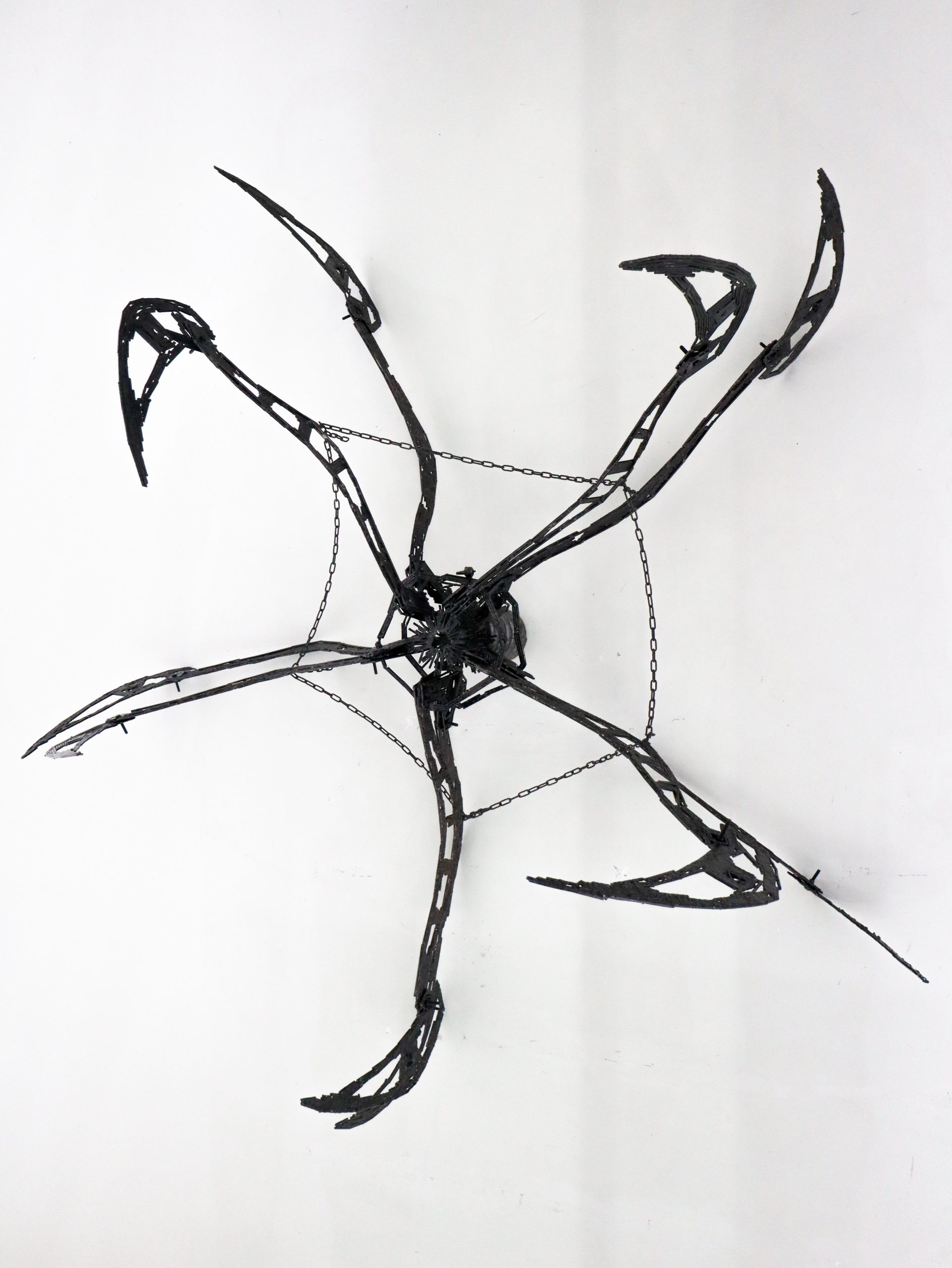
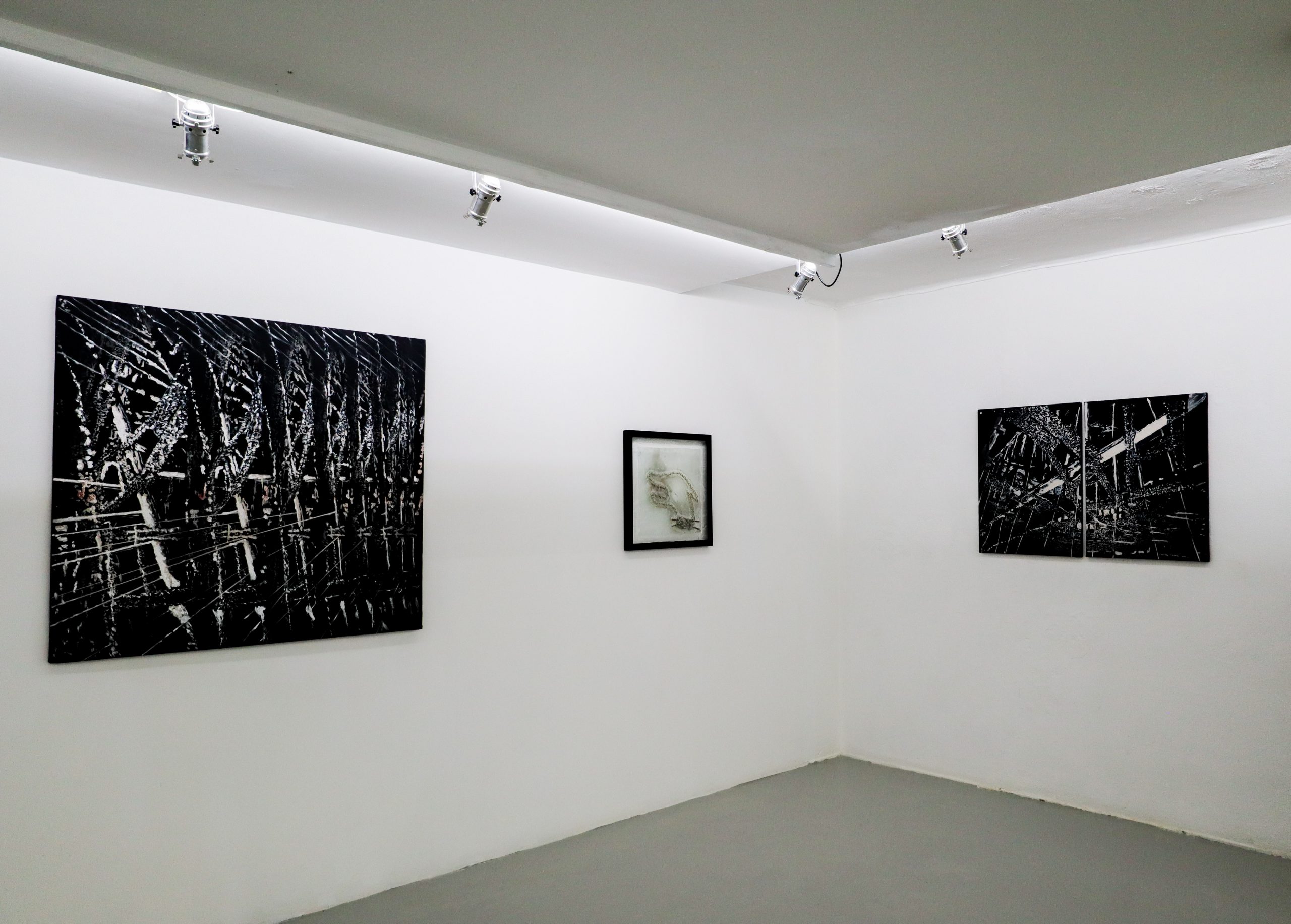
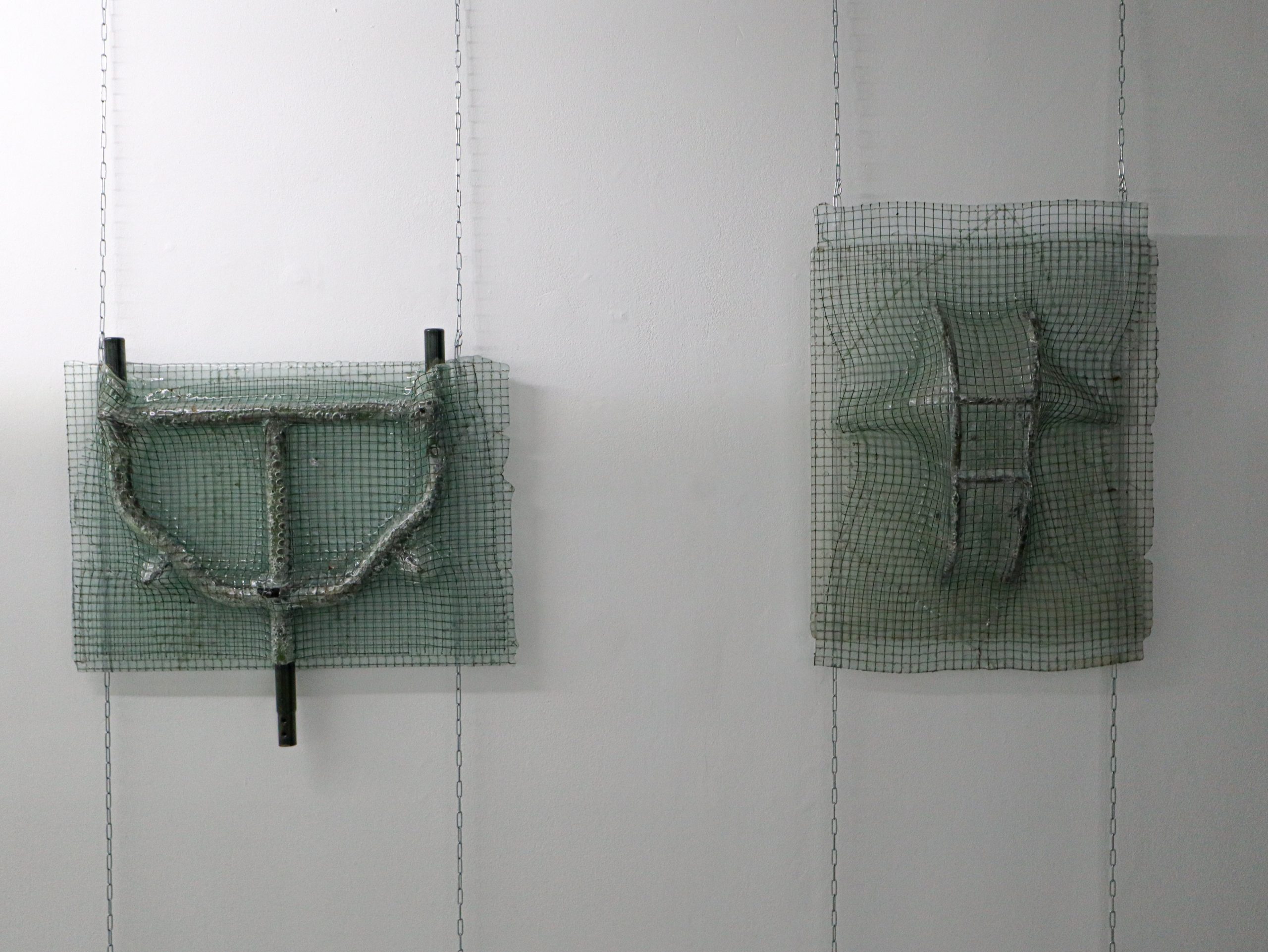
Matter does not appear as a mere support or medium, but as a territory of conflict and transition. Each gesture carries, simultaneously, a promise of construction and a possibility of loss, and within this delicate balance lies the power of the creative process. The chosen materials — steel, chains and glass — embody within themselves this tension between resistance and fragility. The weight and strength of the metal confront the transparency and vulnerability of the glass, composing a field of forces that never stabilises. The chains, at once a bond and a boundary, extend this play between restriction and openness. Each piece is thus born from the friction between materials of distinct natures, which attract and repel one another, and whose dialogue gives shape to a space where creation and destruction intertwine without ever cancelling each other out.
The artist’s gesture is central to this process: every intervention upon matter implies a body that is present, attentive to the weight, texture and reaction of the elements. The gesture is at once an attempt at control and a surrender to improvisation, creating a physical narrative inscribed in the matter itself. Time also manifests within the work: every fold, every impact or fracture is a trace of the journey between the instant of the gesture and the viewer’s gaze. The work, thus, remains always in potential for change — an organism in constant transformation.
The materials also carry a symbolic dimension that amplifies their physical meaning. Steel evokes resistance, permanence and memory; glass evokes delicacy; chains evoke connection and limitation. By combining them, the work constructs a territory where opposing forces coexist, and each piece becomes a tangible polysemy, inviting the viewer to perceive and reflect upon the tension that traverses the creative process.
Unpredictability is an intrinsic part of this path: each gesture may alter or destroy what has been built, and this fragility is, paradoxically, the driving force of the work. Risk is not merely a negative element, but the motor of creation, allowing each piece to exist on the threshold between control and unpredictability.
The work presents itself in a continuous cycle of creation and destruction — in a double impulse that remains in perpetual motion. The central piece invokes the Welwitschia, a plant that survives for centuries in extreme conditions, becoming an ideological symbol of a continuous cycle of transformation that permeates the creative process. This cycle of creation and destruction is found in natural and scientific phenomena: supernovas, which destroy stars to spread elements and form new galaxies; black holes, which consume matter while generating accretion discs and jets of energy; nuclear fusion in stars, which transforms hydrogen into helium and energy; and chemical reactions, in which atoms break apart and reorganise ceaselessly. Thus, matter and gesture reveal the double impulse — accumulation and erosion, construction and collapse — as each work offers a space for reflection on the complexity of the creative impulse, the tension that moves through materials and gestures, and the continuous flow between creation and destruction.
Lisboa, 2025
Carolina Piçarra
Categoria
Past Exhibitions, Past Exhibitions